Agentic and Reasoning Models
Building models with stronger reasoning, planning, and tool-use abilities.
I am a researcher at Shanghai AI Laboratory, focusing on agentic and reasoning models, self-evolving agentic systems, frontier benchmarks, and AI for scientific discovery. I received my Ph.D. in Computer and Information Engineering from The Chinese University of Hong Kong, Shenzhen (CUHKSZ), and received my Bachelor’s degree in Physics from the University of Chinese Academy of Sciences (UCAS).
Recently, I have contributed to open-source models including Agents-A1 (a 35B long-horizon agentic model), P1-VL (multimodal physics reasoning models), and P1 (text-only physics reasoning models). I also lead PhysicsMinions, the first open-model agentic system to reach IPhO-2025 gold-medal level, and HiPhO, the first physics Olympiad benchmark covering 13 recent physics Olympiads from 2024-2025 and used in the Seed 2.0 evaluation leaderboard.
I am actively looking for research collaborators, whether early-career or experienced, especially those from scientific domains. Feel free to reach out.
Building models with stronger reasoning, planning, and tool-use abilities.
Designing autonomous systems for long-horizon tasks and scientific discovery.
Evaluating reasoning models with reliable, holistic, and science-grounded benchmarks.
Developing agents and models that accelerate scientific discovery.
* Equal Contribution, † Corresponding Authors
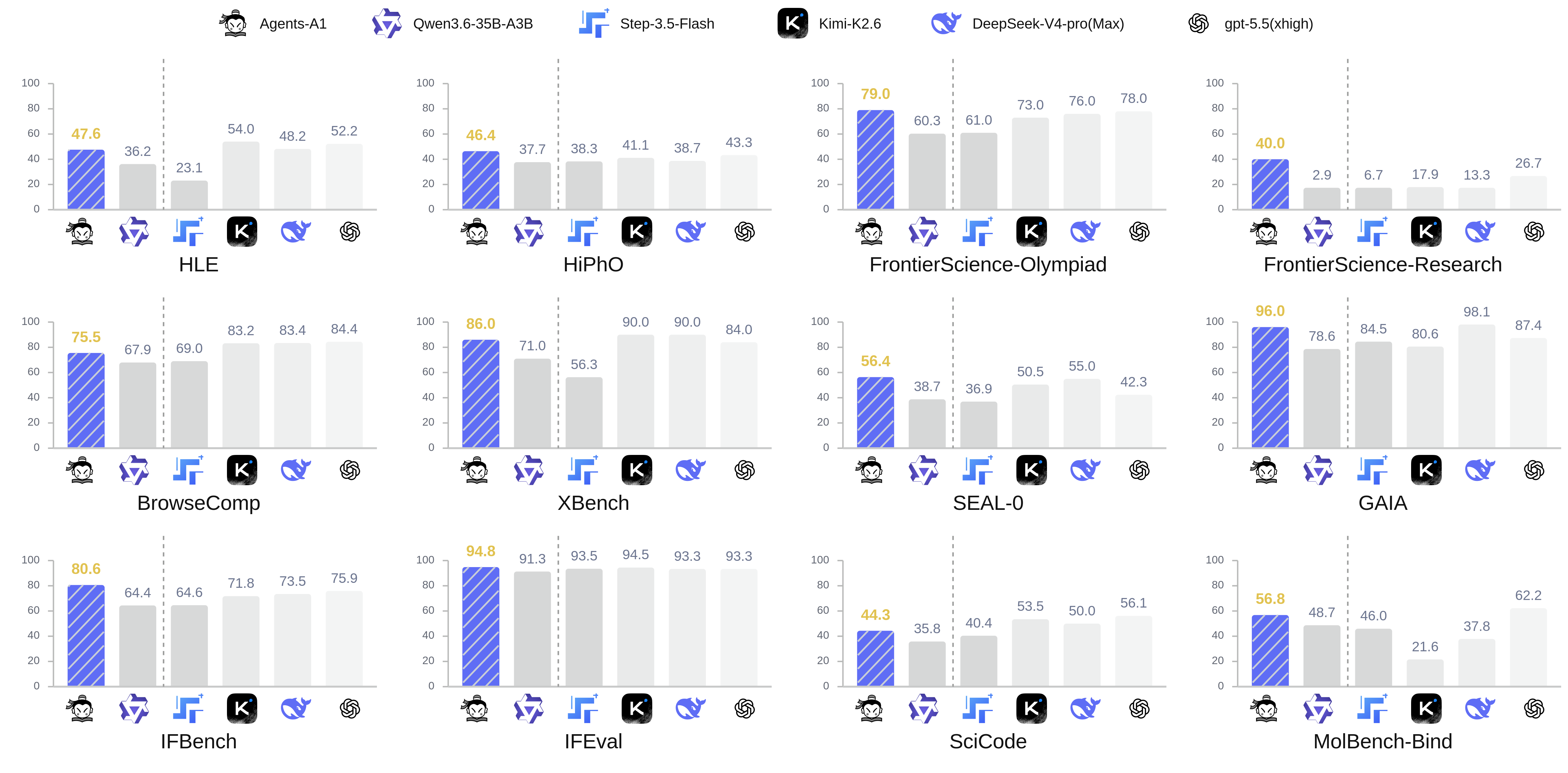
Technical Report, 2026-06 (key contribution to this project)
A 35B agentic model reaches stronger long-horizon reasoning performance through agent-level scaling.
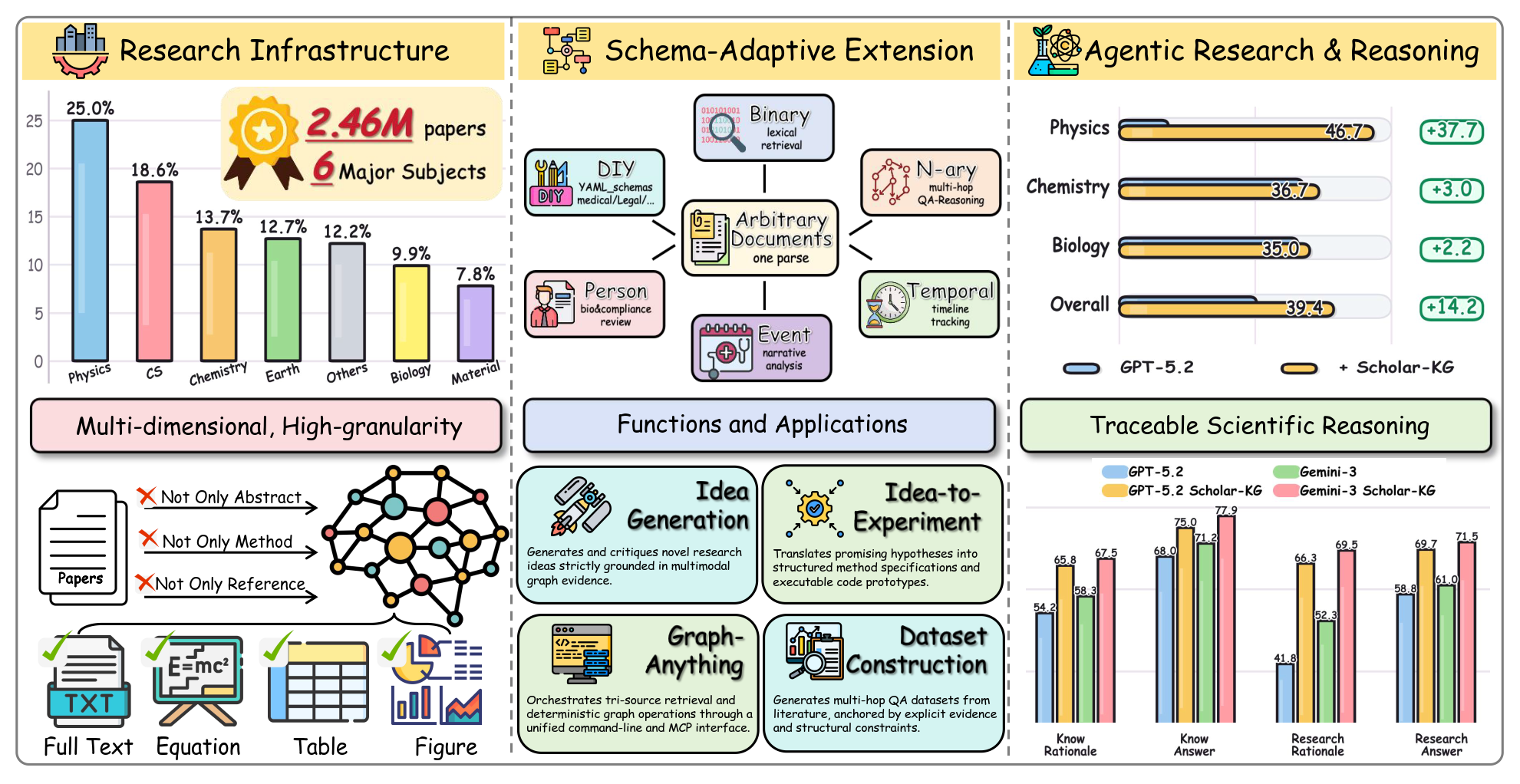
Technical Report, 2026-06
An end-to-end knowledge orchestration pipeline that converts raw documents into agent-native scientific knowledge graphs.
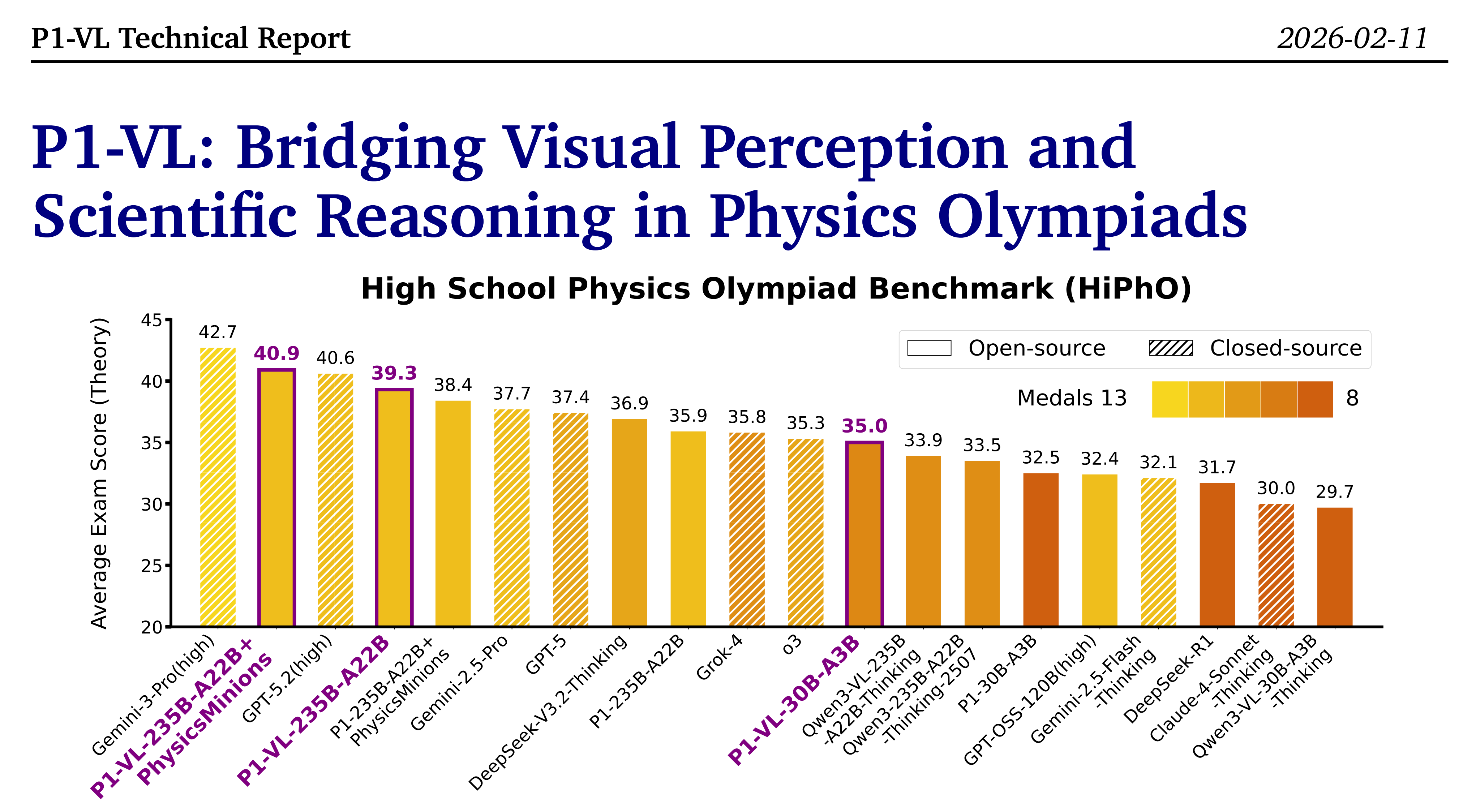
ICML AI4Math Workshop, 2026 (key contribution to this project)
A family of open-source vision-language models engineered for advanced scientific reasoning.
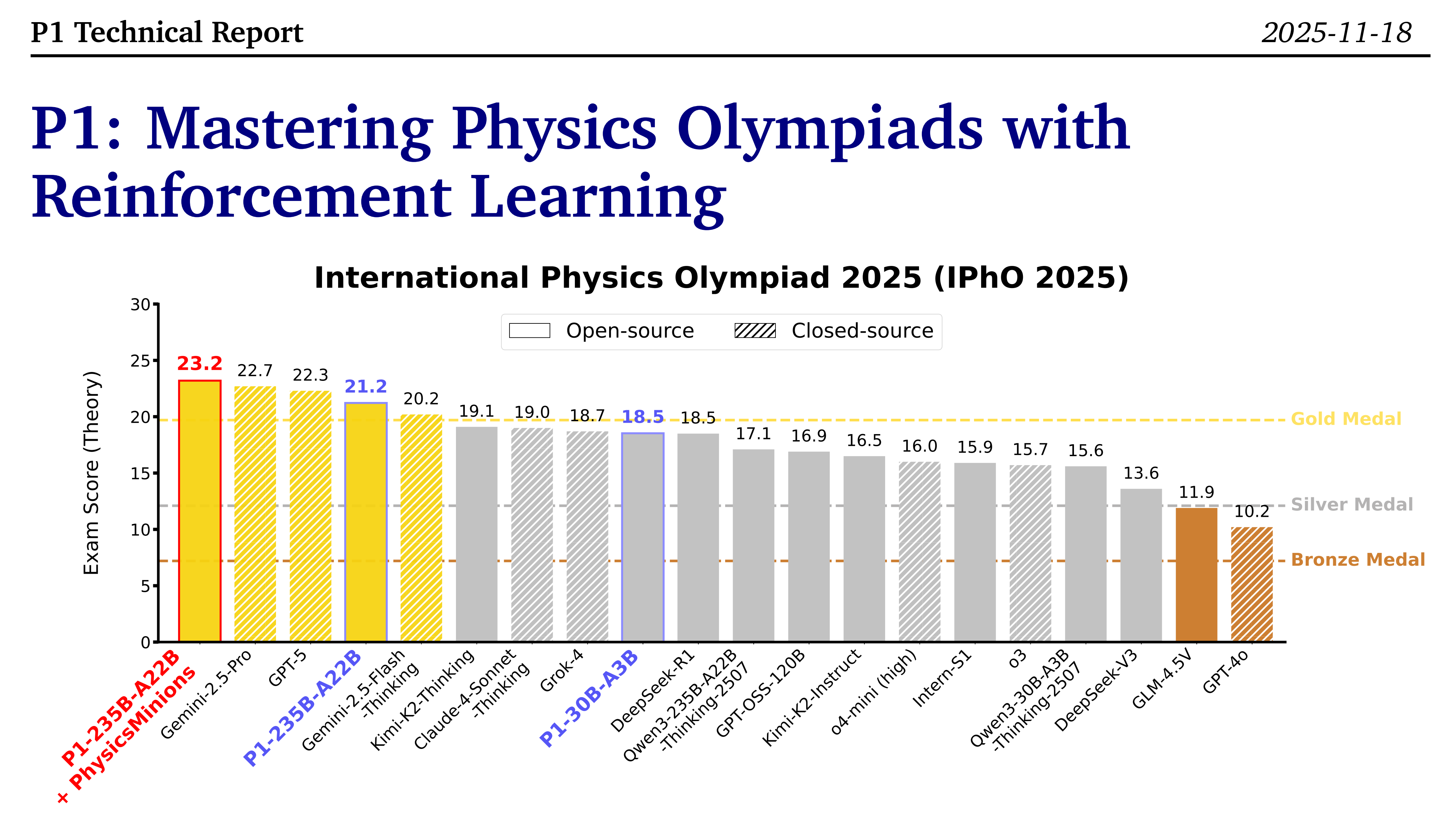
Technical Report, 2025-11 (key contribution to this project)
A family of open-source physics reasoning models trained entirely through reinforcement learning.
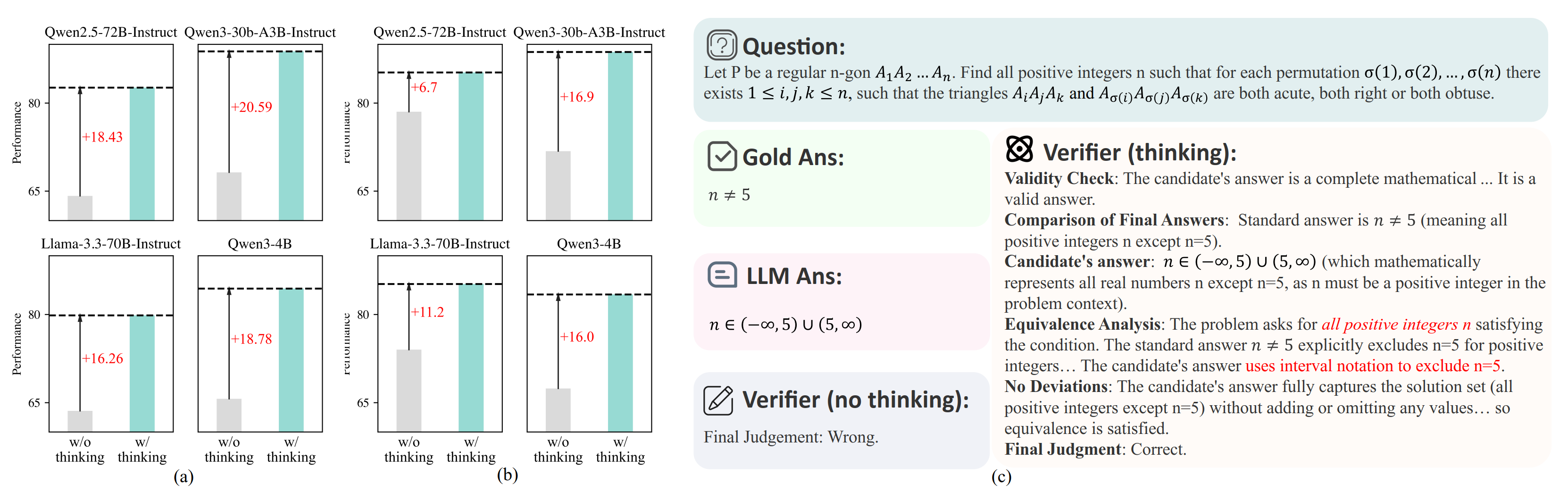
ICLR, 2026
A unified reasoning-augmented verifier for scientific domains with enhanced reliability.
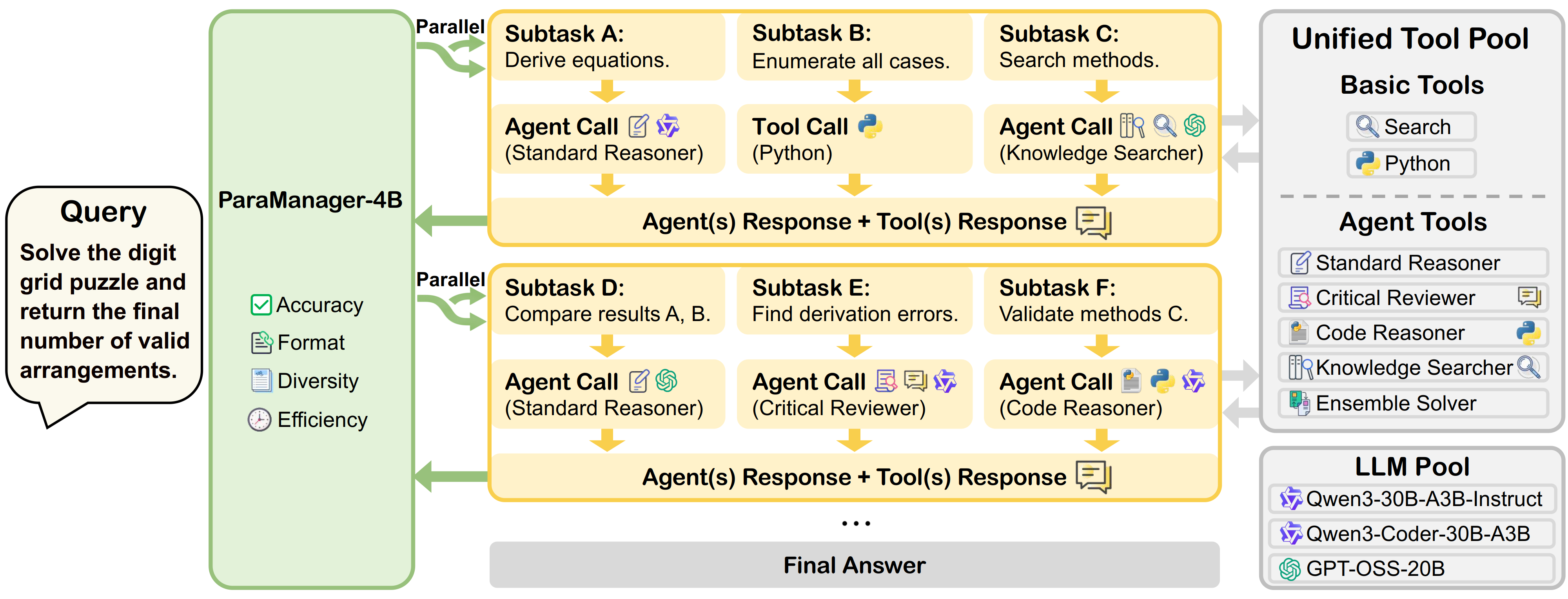
arXiv, 2026-04
A 4B orchestrator model learns parallel decomposition and tool coordination for agent workflows.
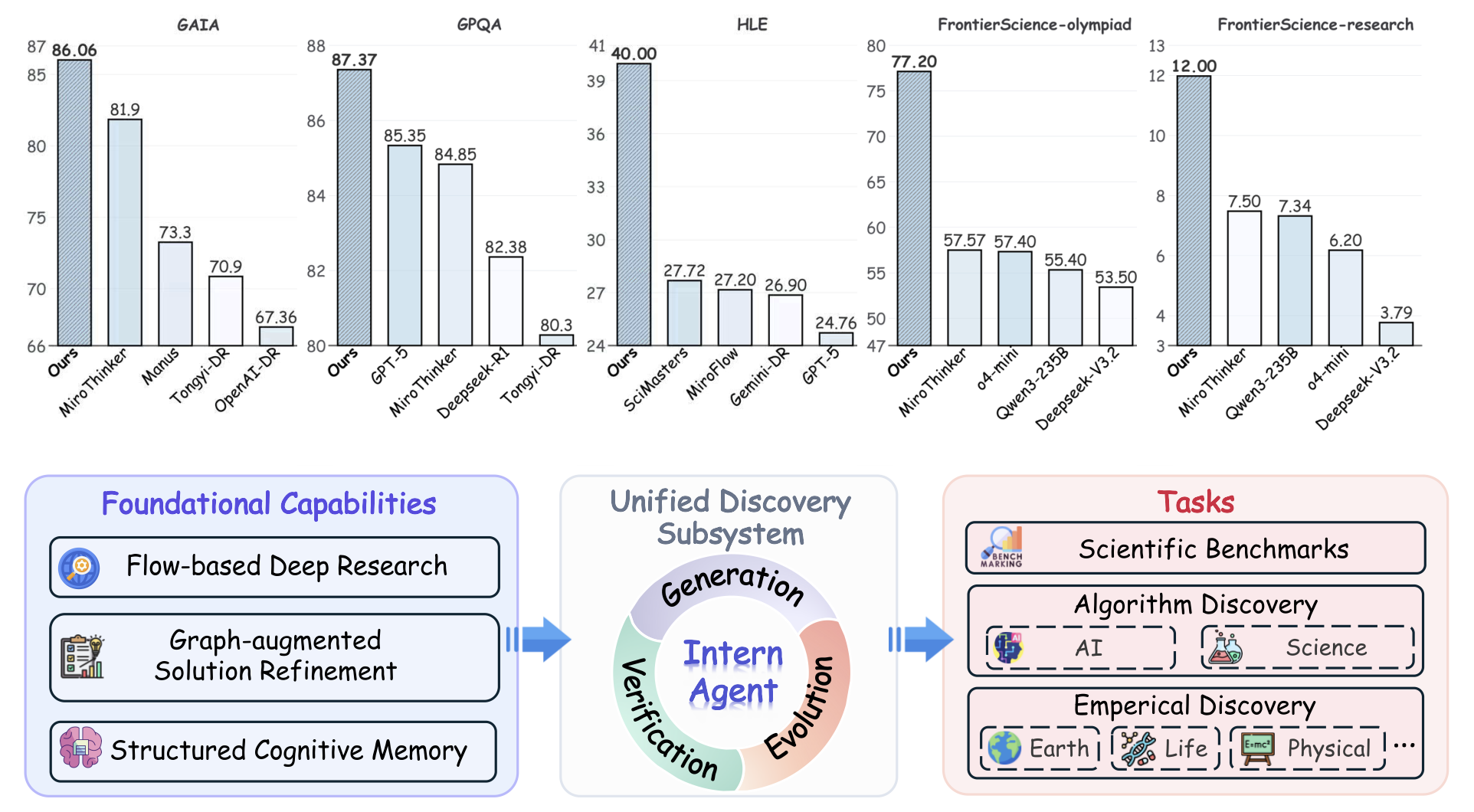
Technical Report, 2026-02
A unified agentic framework designed for end-to-end scientific discovery in long-horizon tasks.
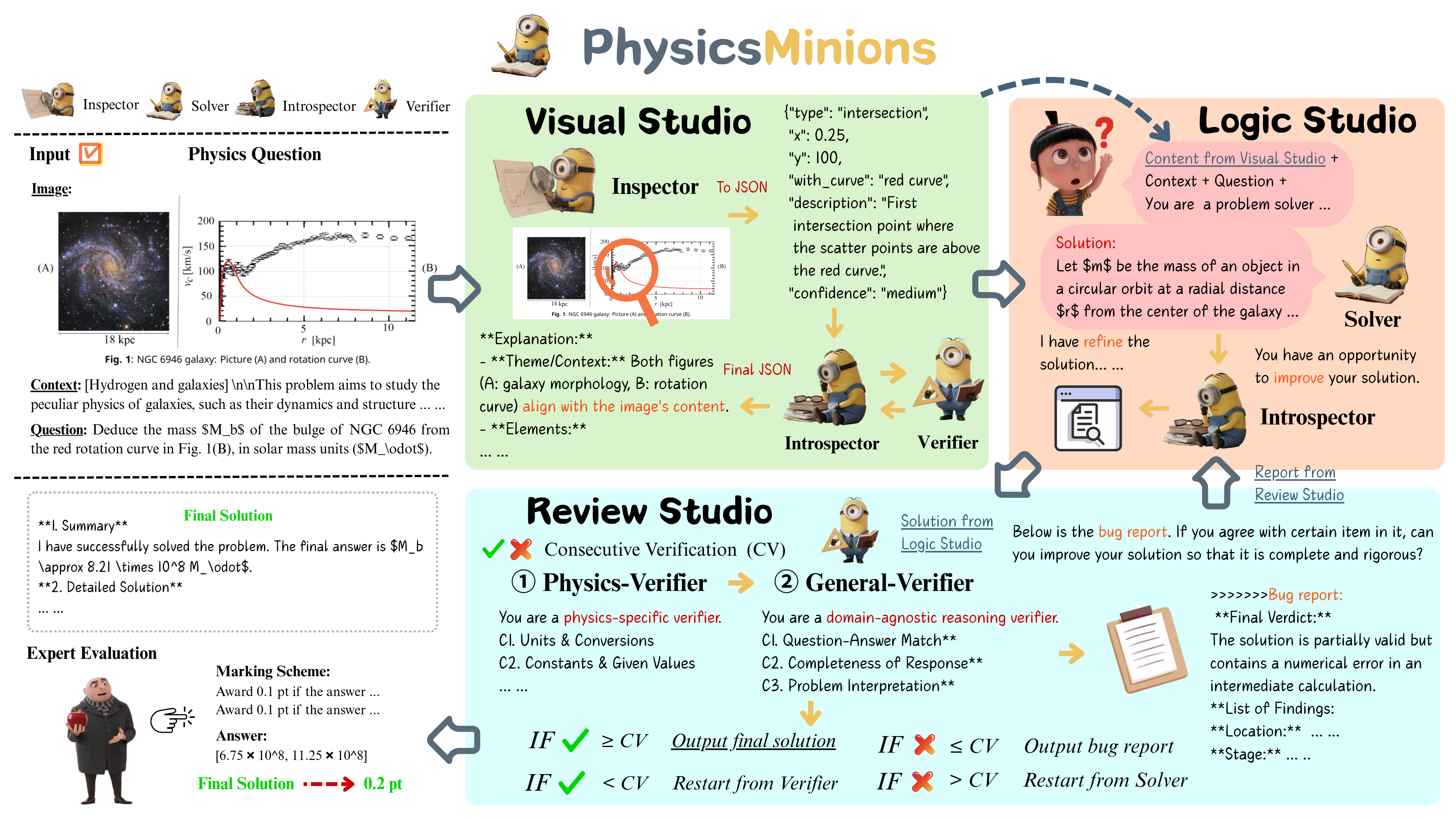
arXiv, 2025-09
A coevolutionary multimodal multi-agent system wins gold medals in the latest physics Olympiads.
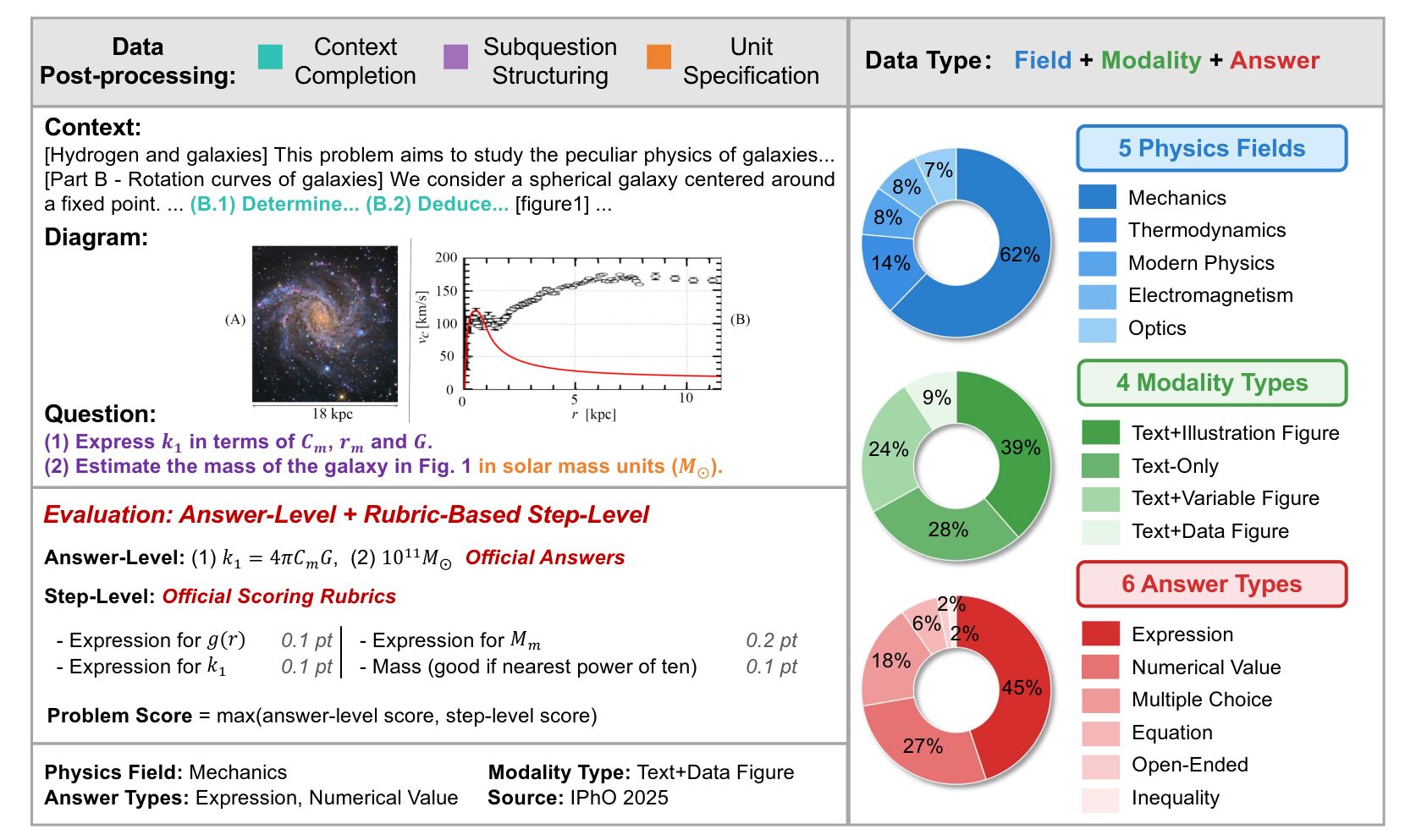
ICML, 2026
The first benchmark dedicated to high school physics Olympiads with human-aligned evaluation.
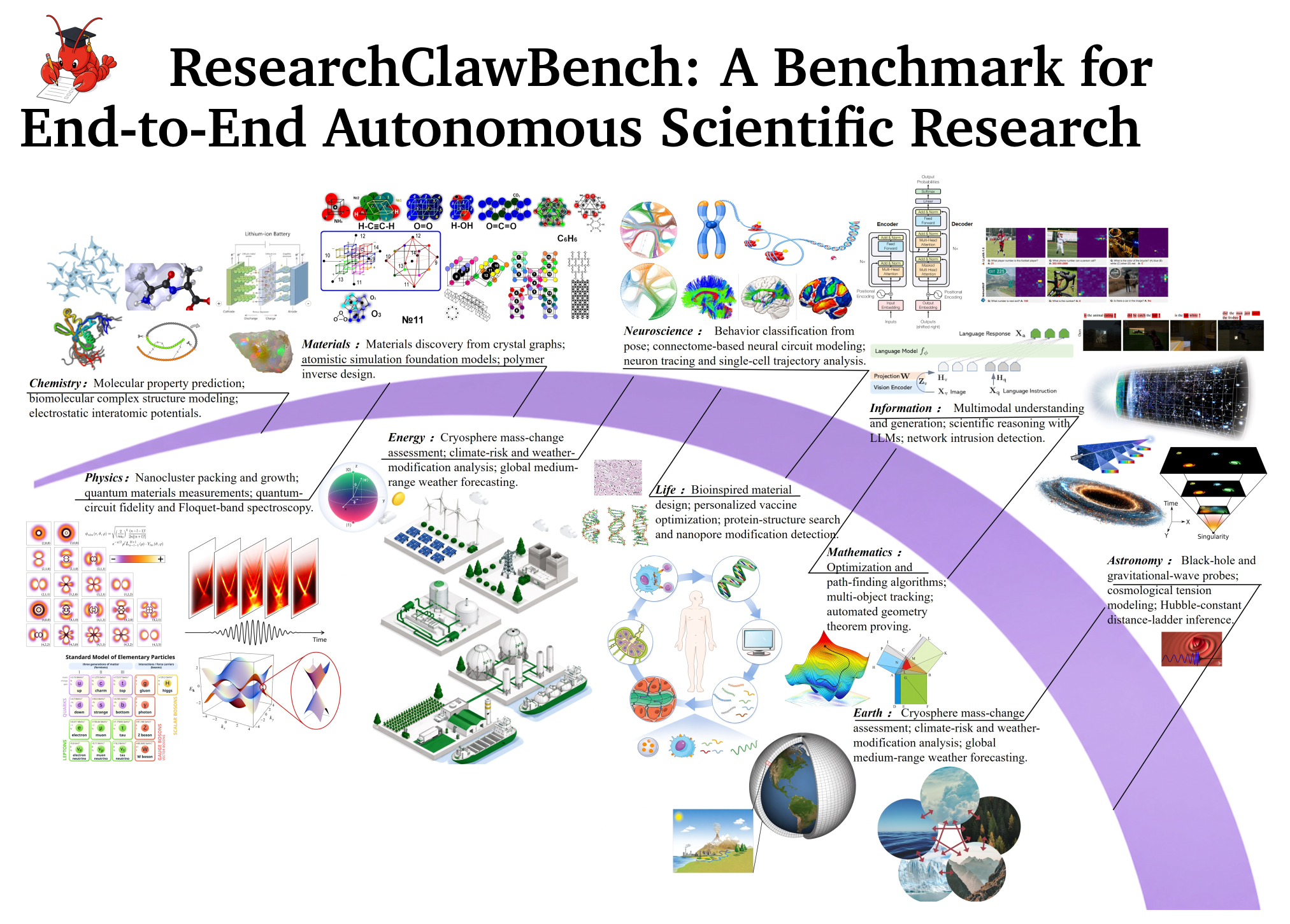
arXiv, 2026-05
A benchmark evaluates end-to-end autonomous systems on realistic scientific research tasks.
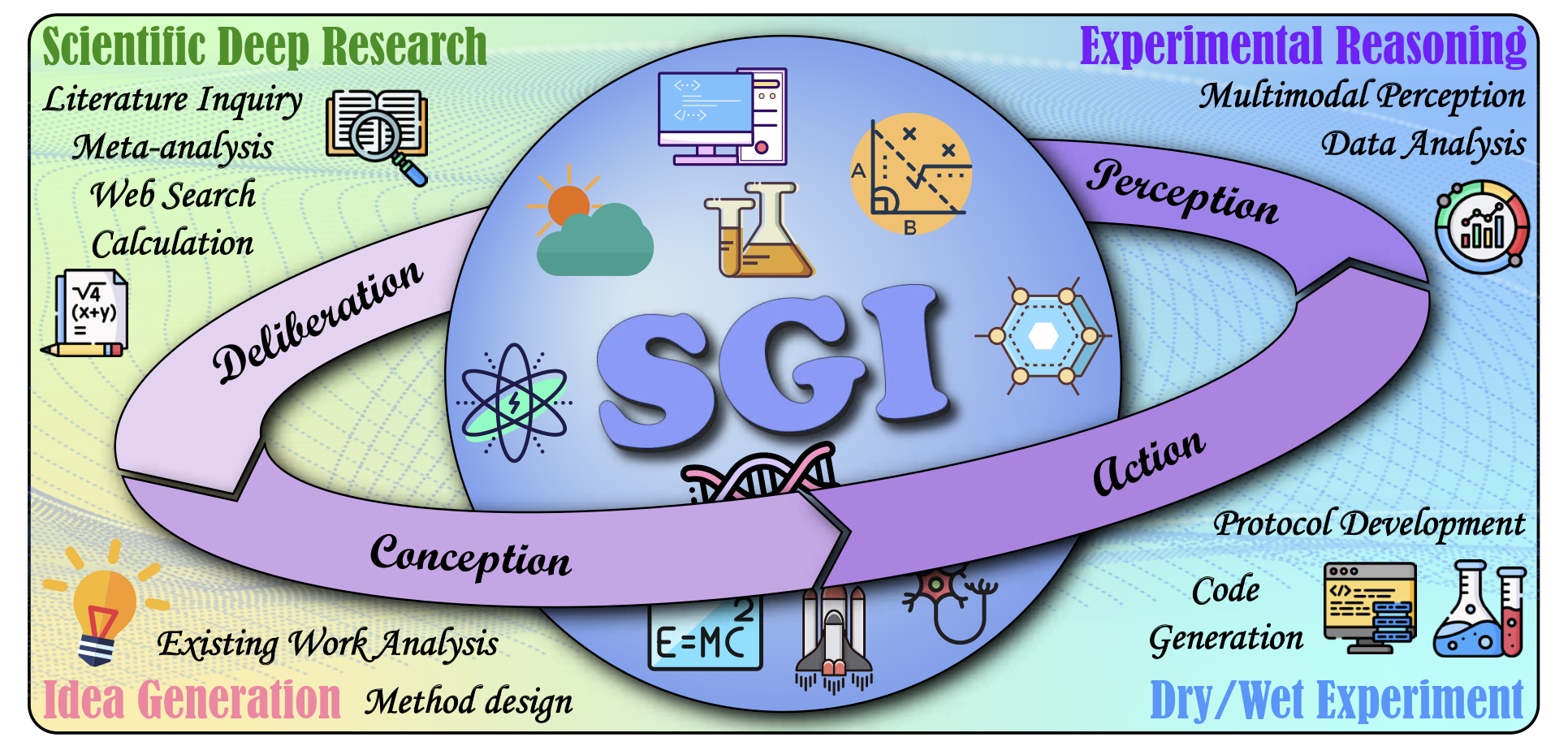
arXiv, 2025-12
A scientific intelligence benchmark for LLMs via scientist-aligned workflows.
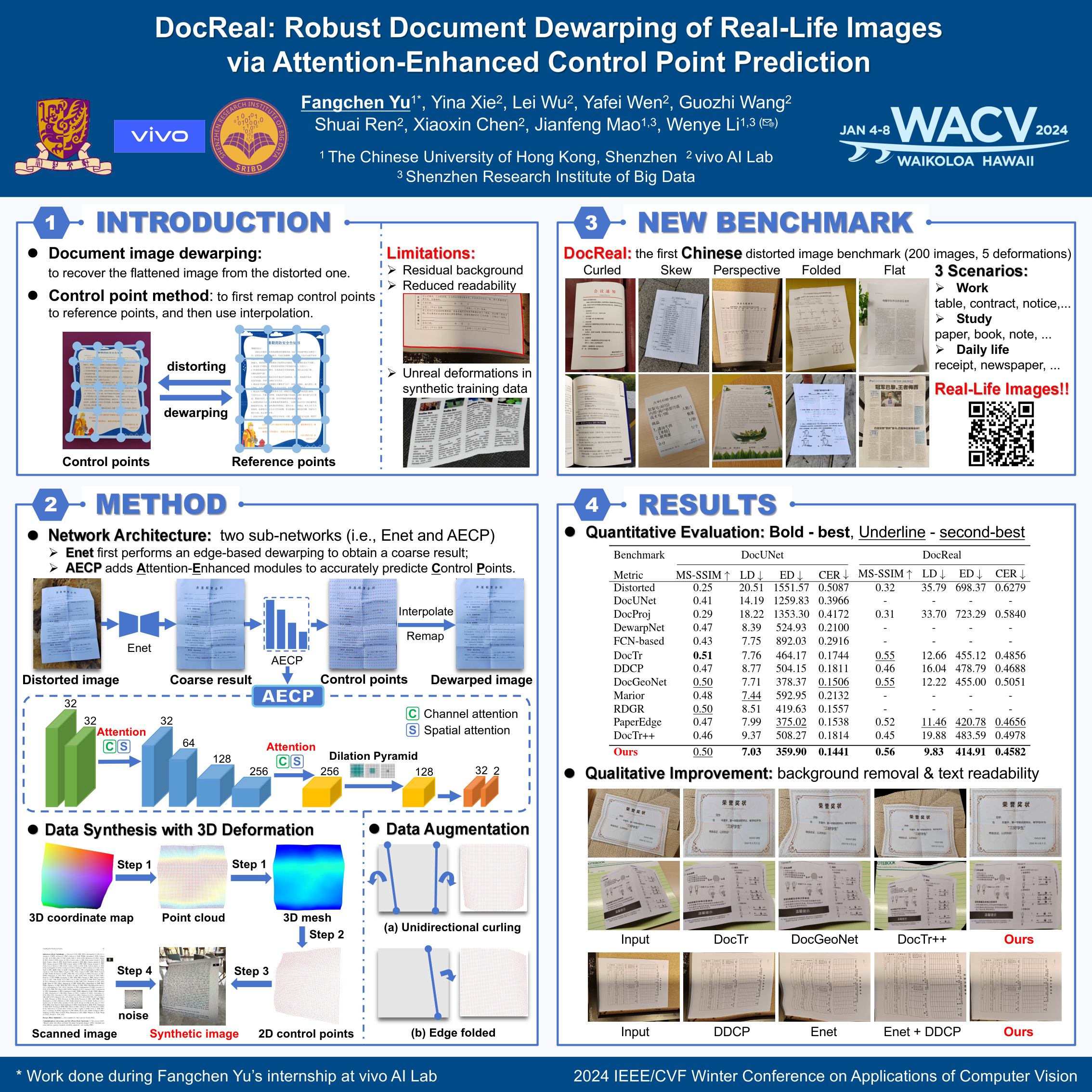
WACV, 2024
An attention-enhanced control point approach improves robust dewarping for real-world document images.
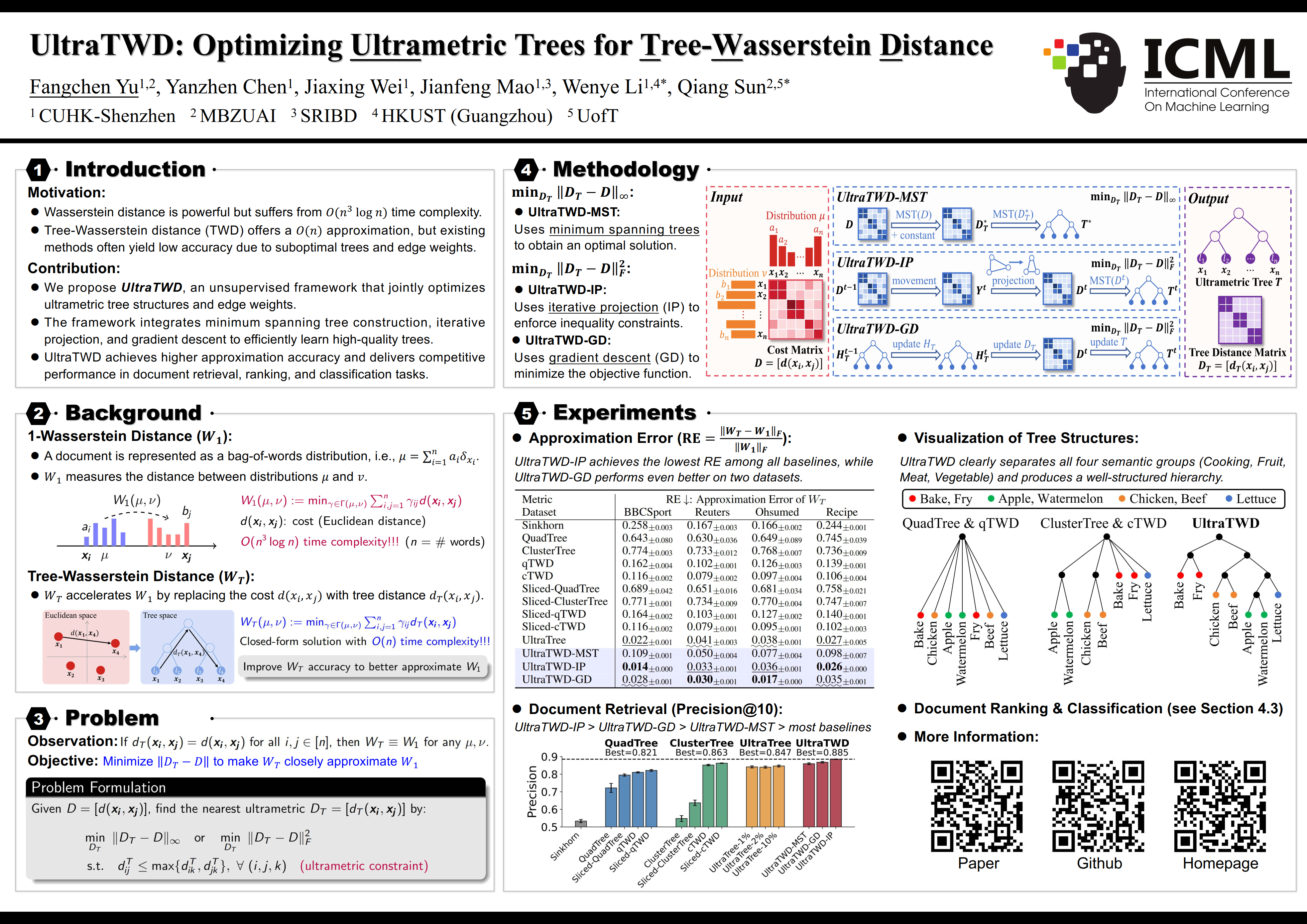
ICML, 2025
A method for optimizing ultrametric trees to improve efficient Tree-Wasserstein distance approximation.
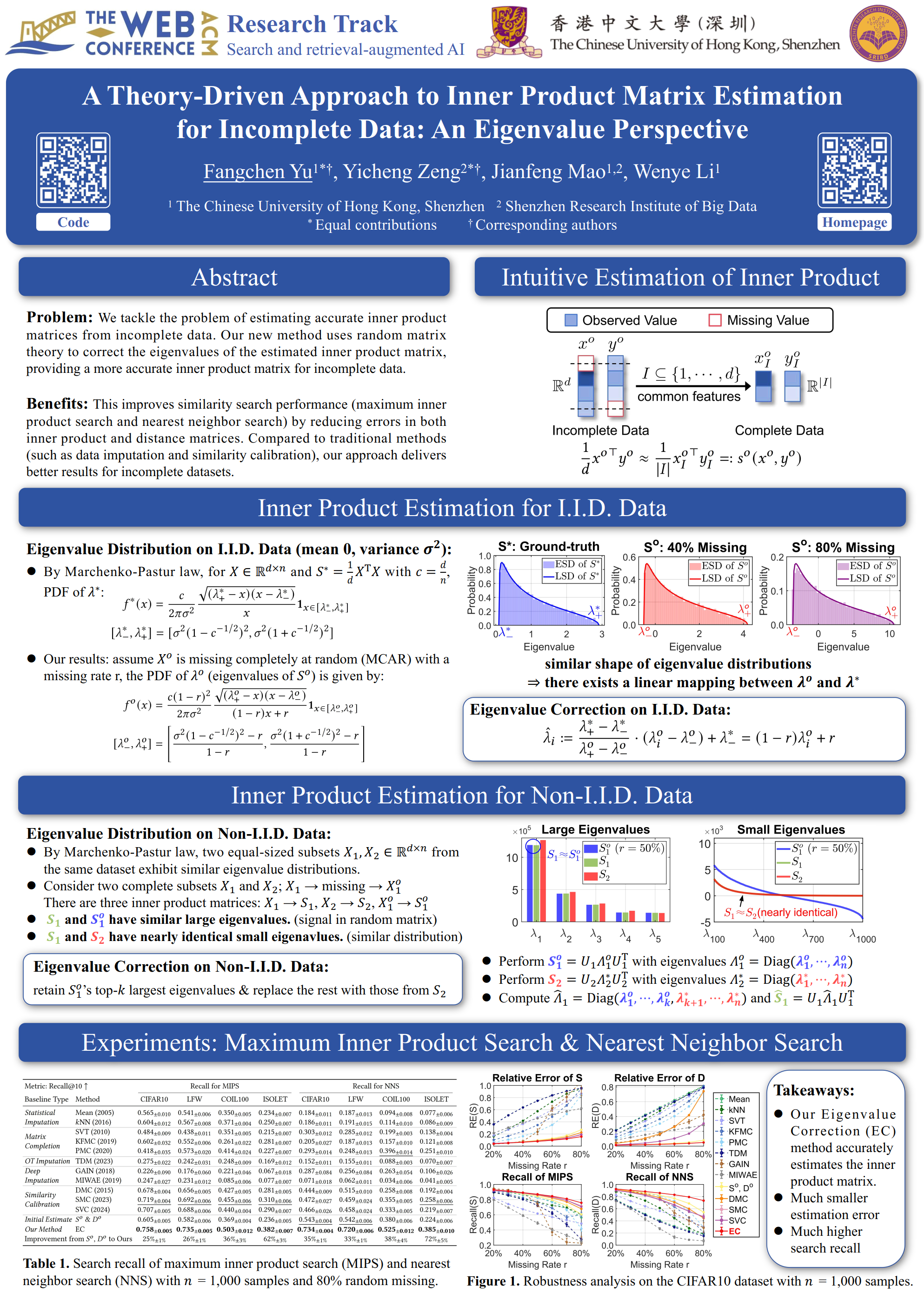
WWW, 2025
A theory-driven method for inner product matrix estimation on incomplete data.
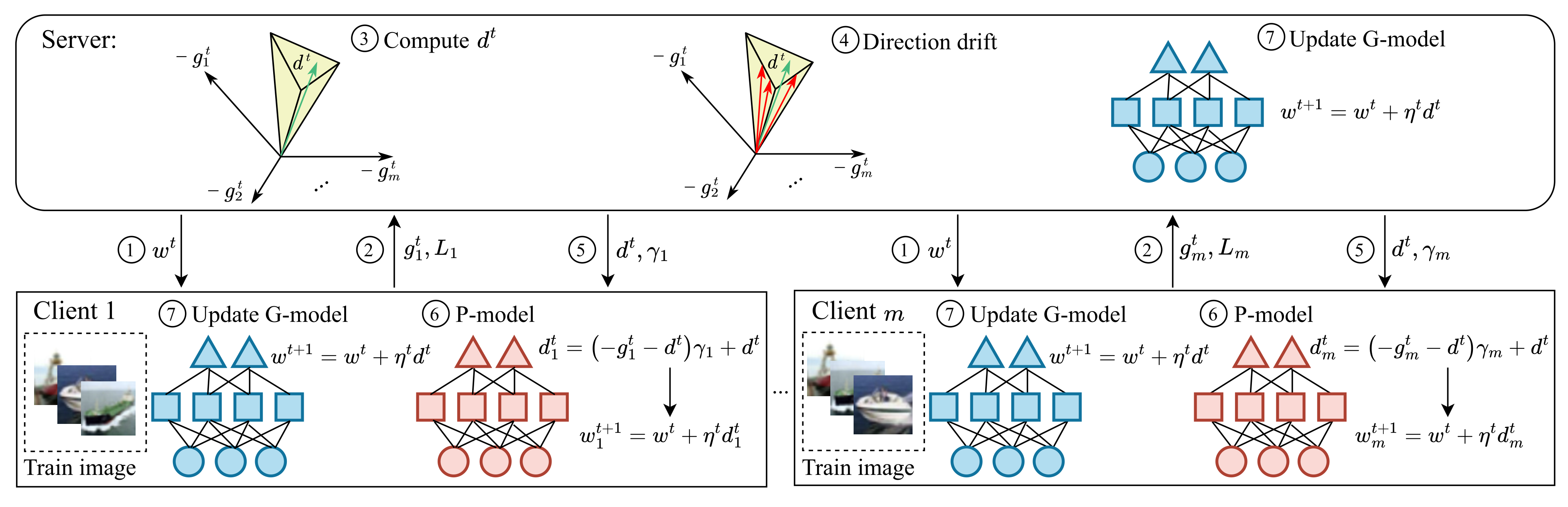
Information Sciences, 2025
A federated learning method balances the trade-off between global and personalized performance.
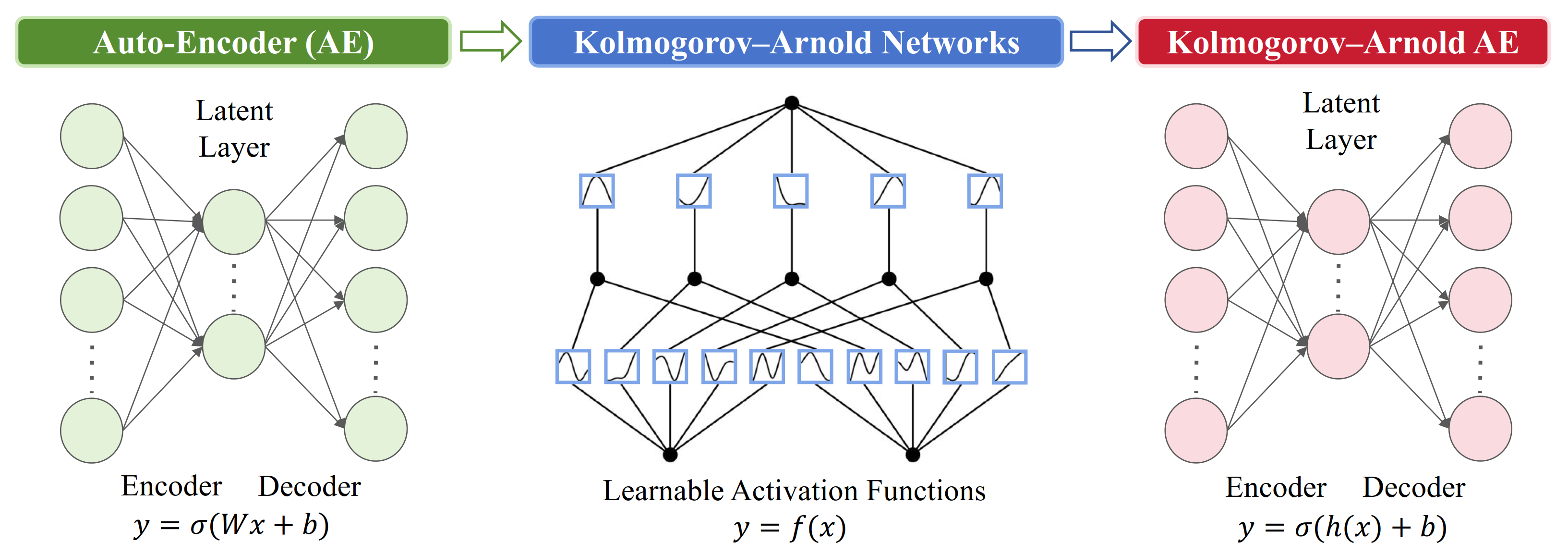
arXiv, 2024
An auto-encoder architecture explores Kolmogorov-Arnold network for representation learning.
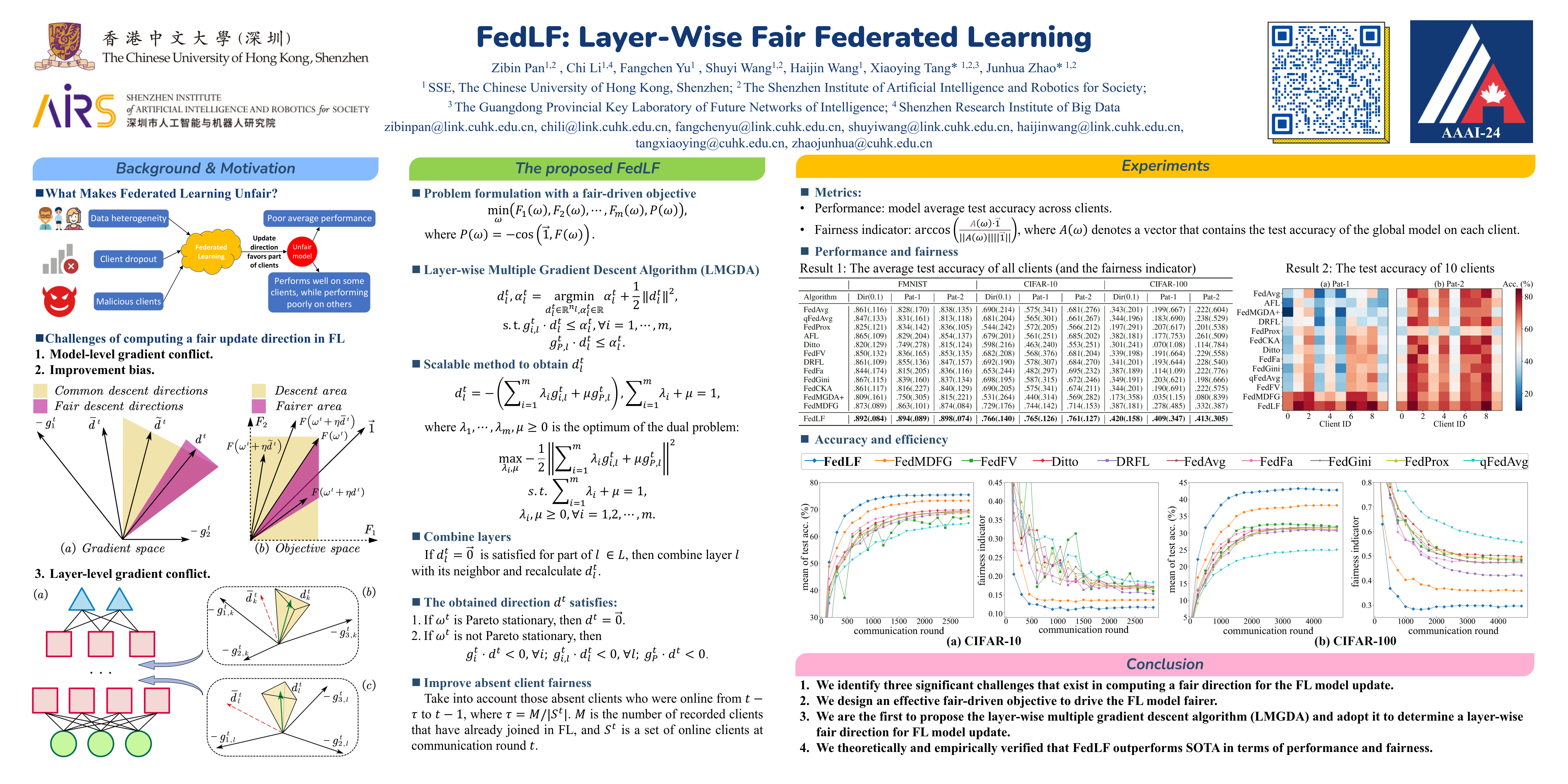
AAAI, 2024
A layer-wise approach improves fairness in federated learning.
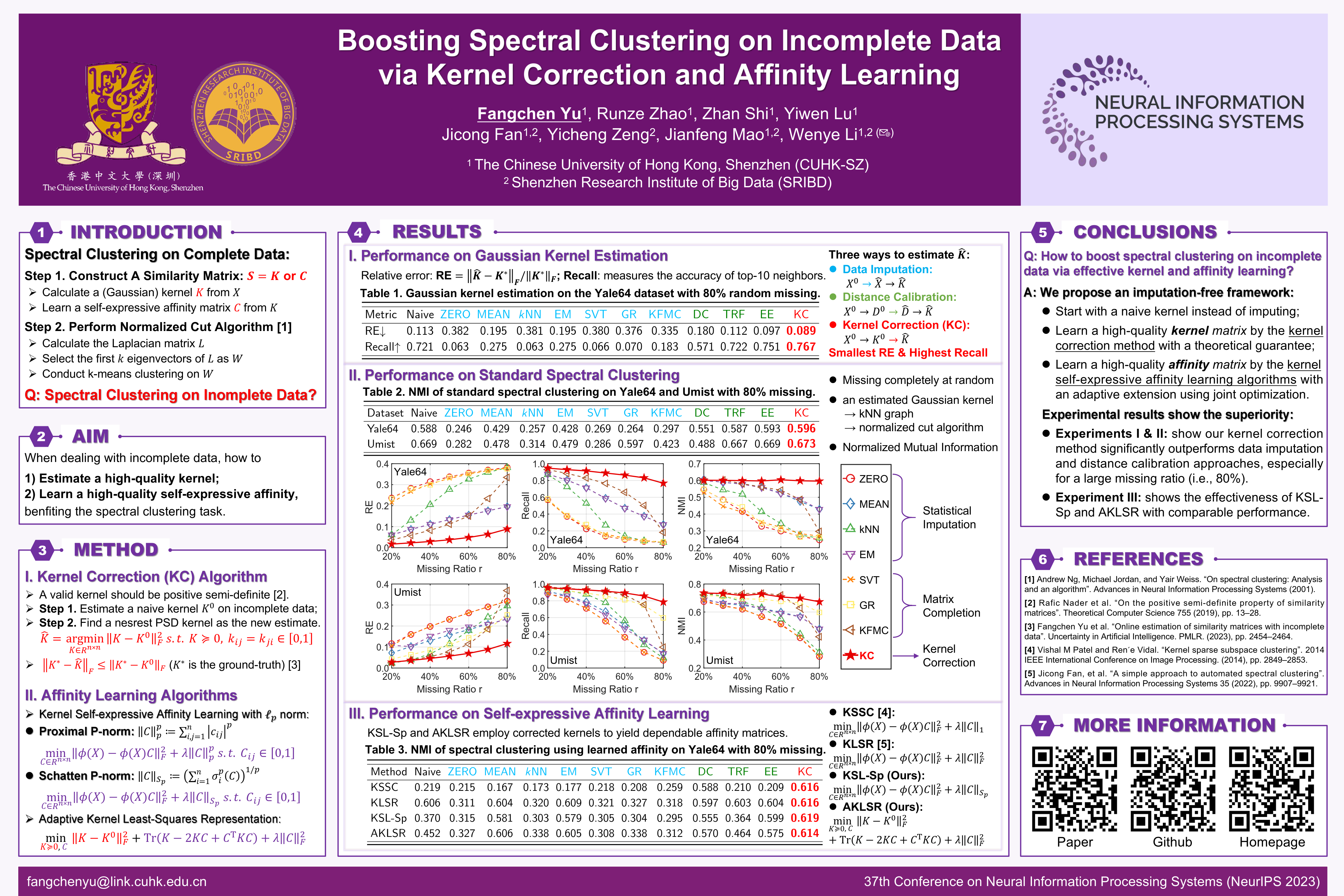
NeurIPS, 2023
Kernel correction and affinity learning improve spectral clustering with incomplete observations.
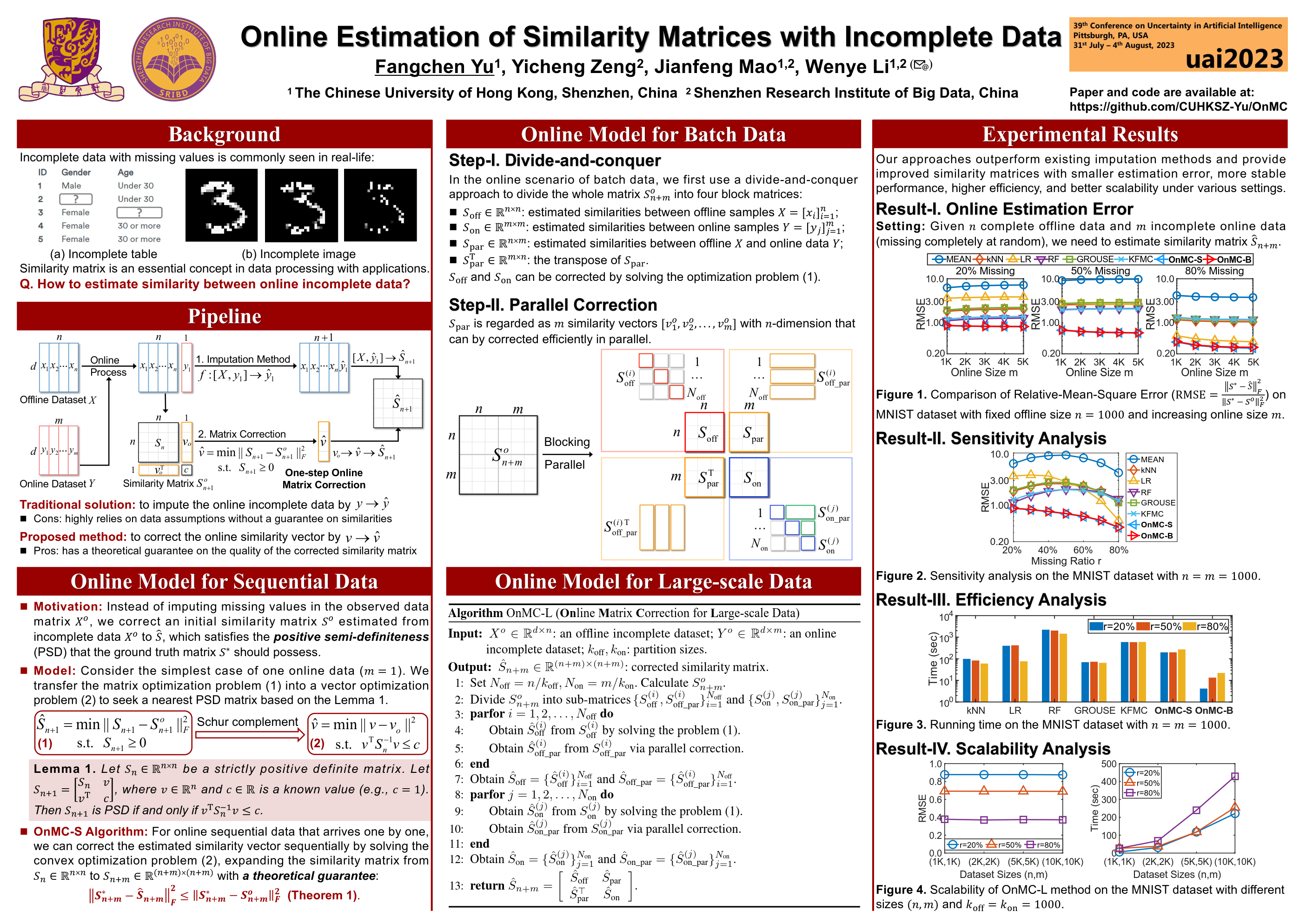
UAI, 2023
A series of online estimation methods correct similarity matrices under incomplete data observations.
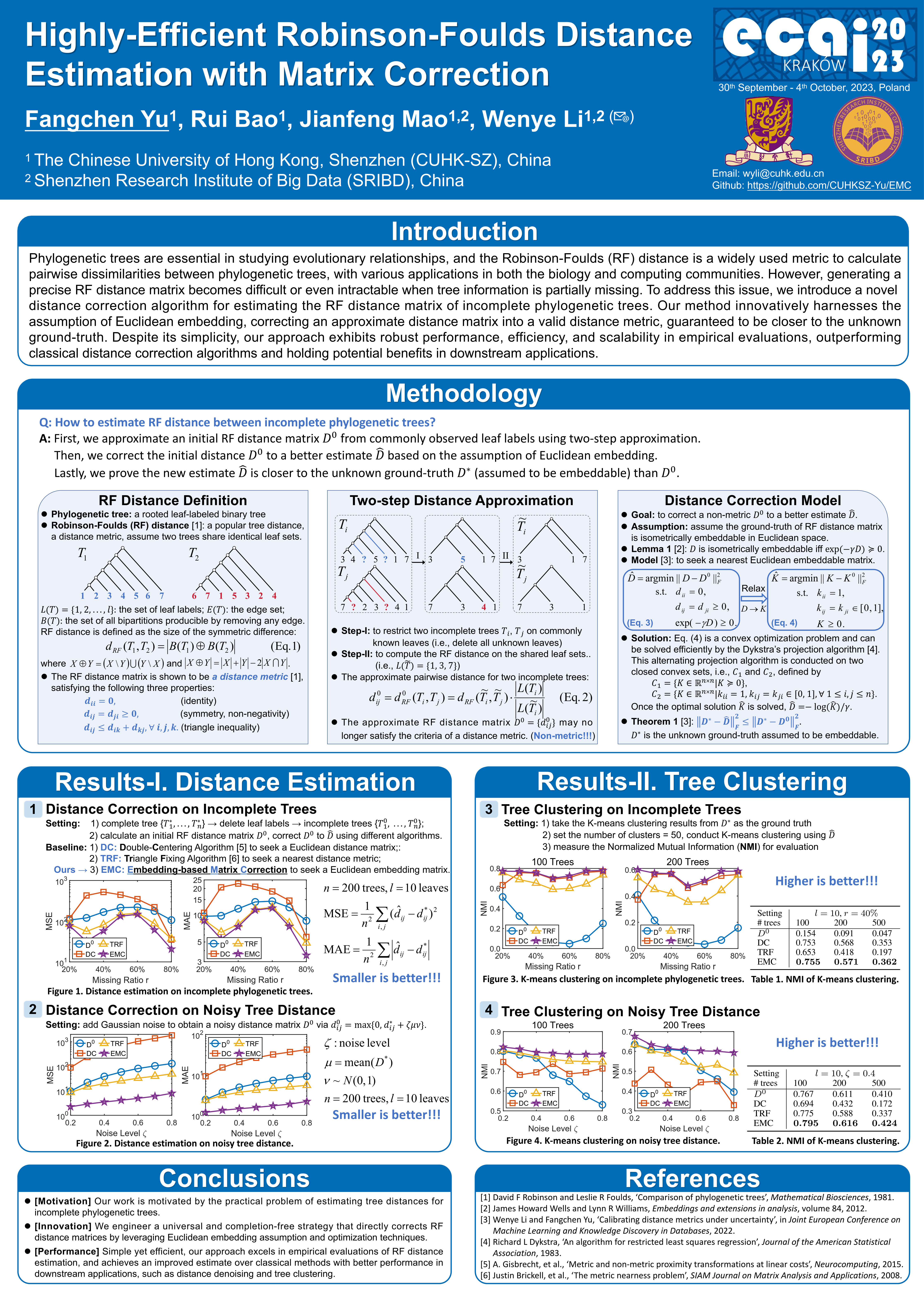
ECAI, 2023
Matrix correction enables efficient estimation of Robinson-Foulds distance.
ICONIP, 2023
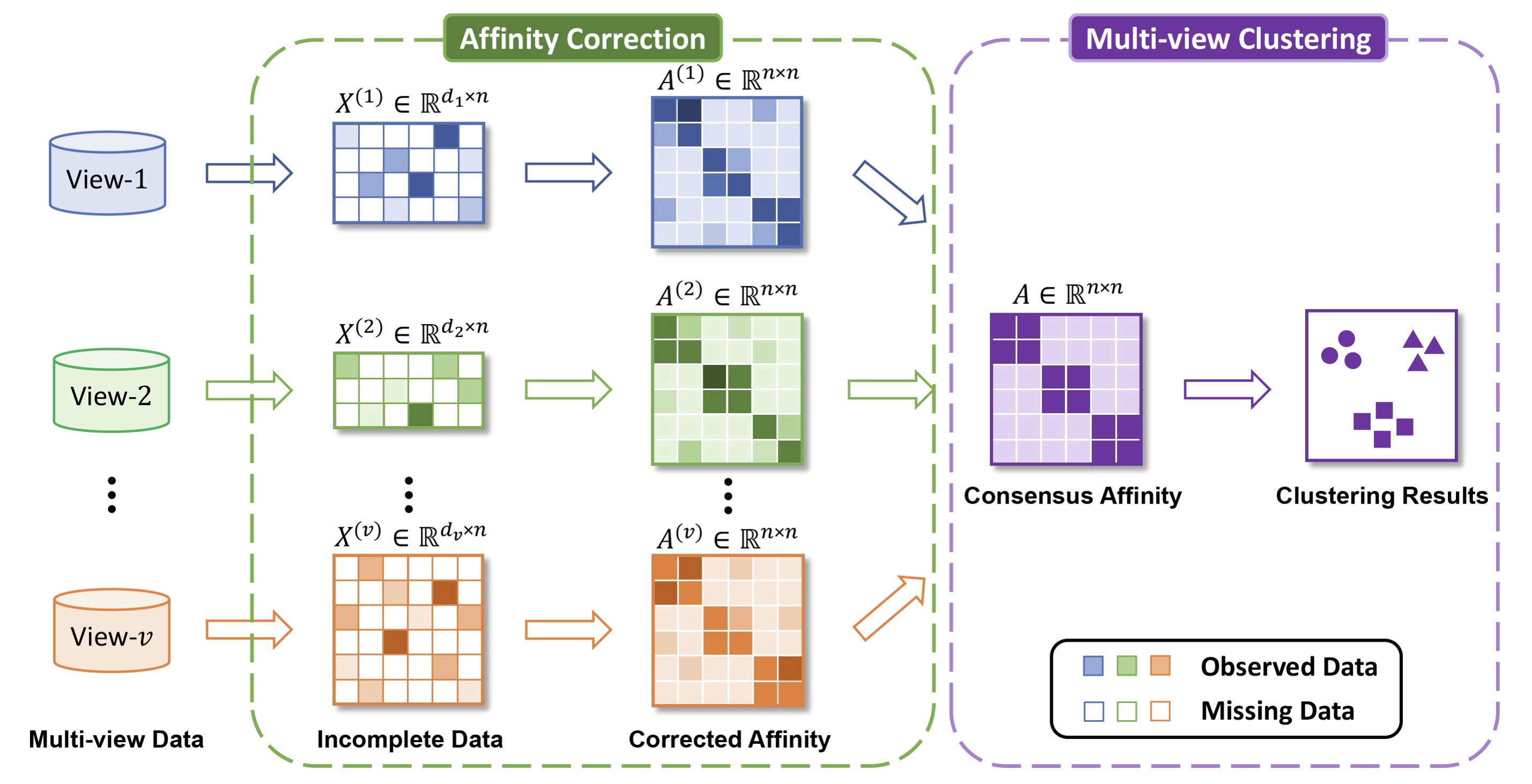
A multi-view clustering framework handles missing values across multiple views.
AAAI, 2023
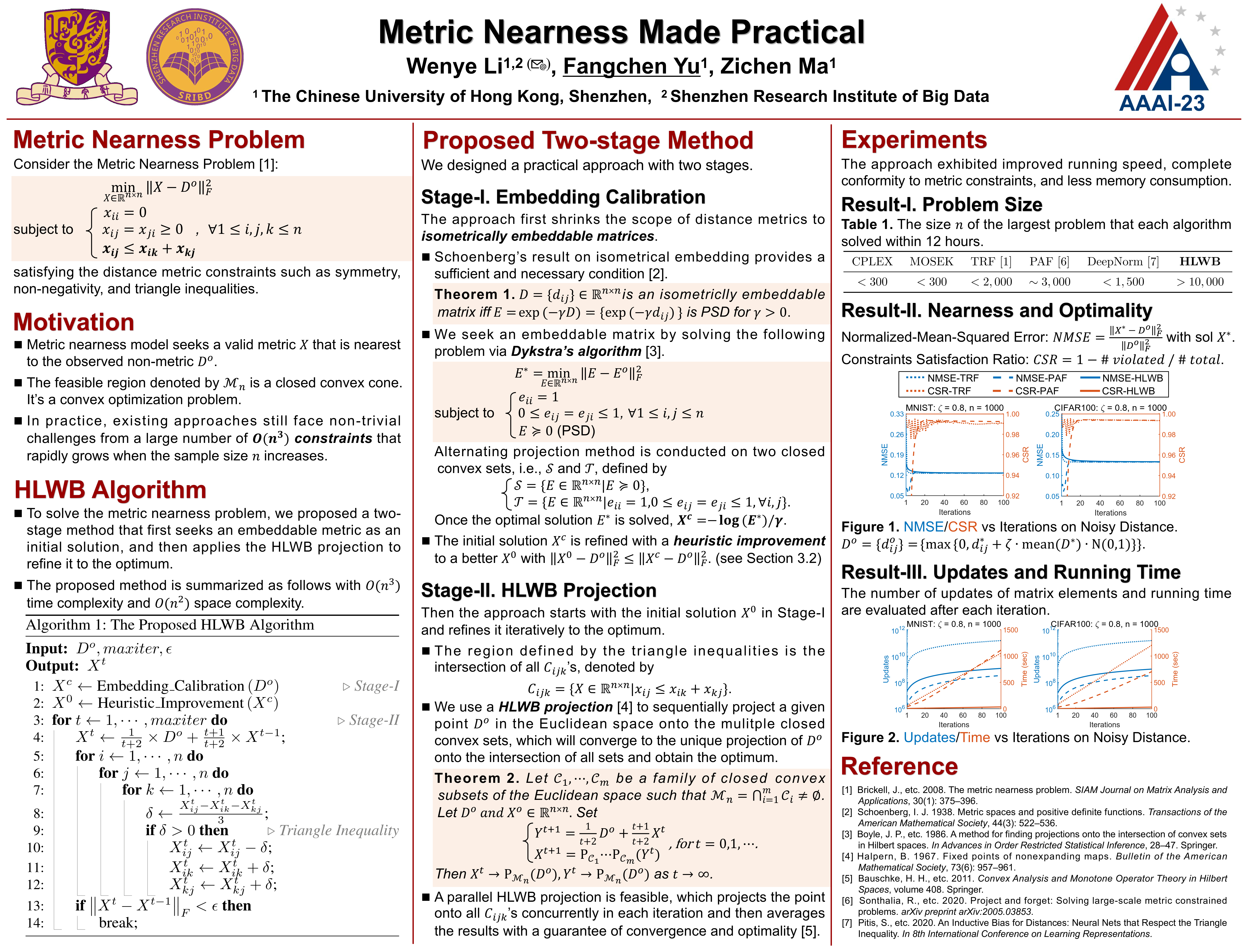
A practical approach improves the usability and efficiency of metric nearness model computation.
ECML, 2022
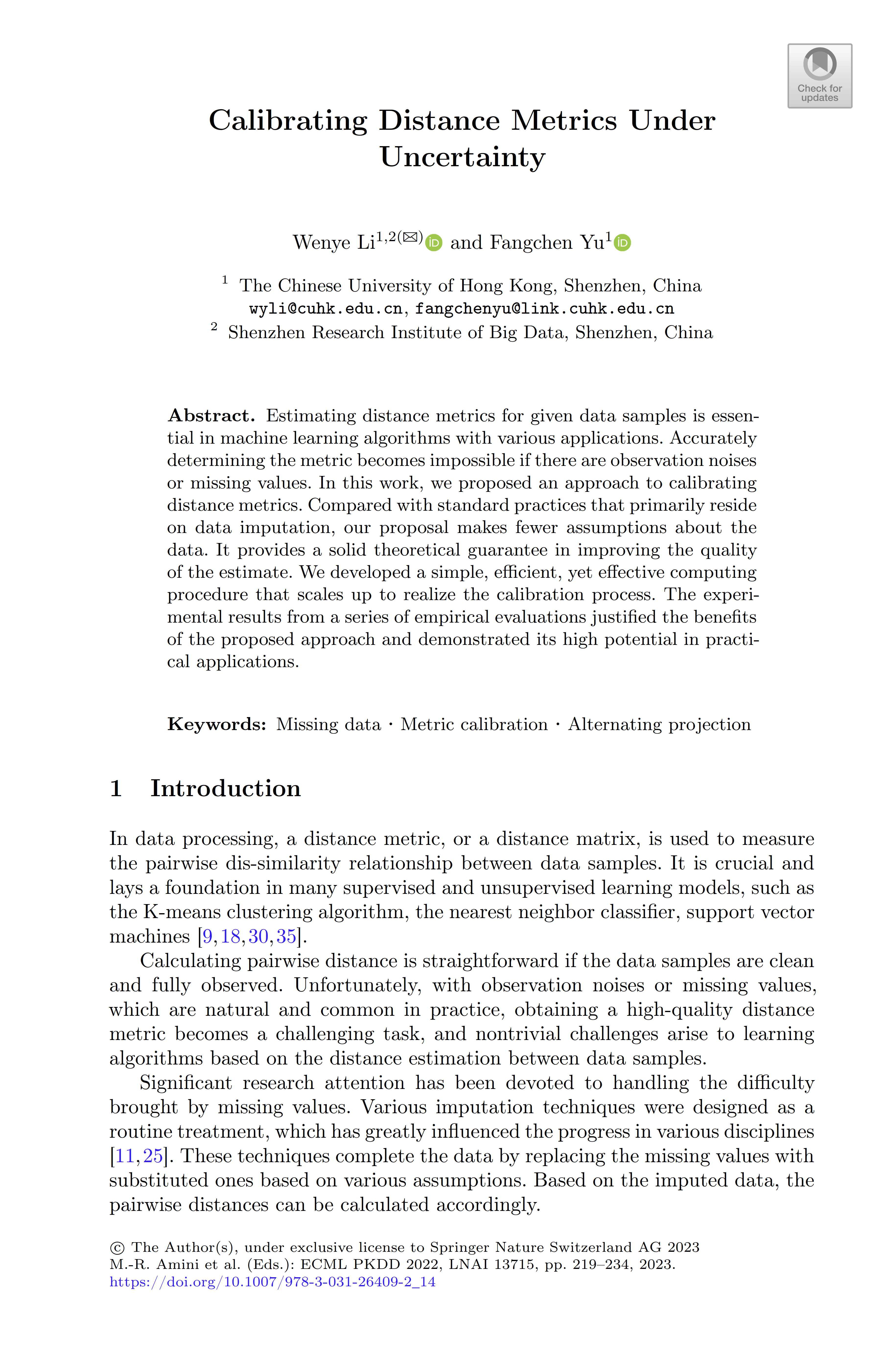
A calibration method improves distance metric estimation when observations are uncertain.
CIKM, 2021
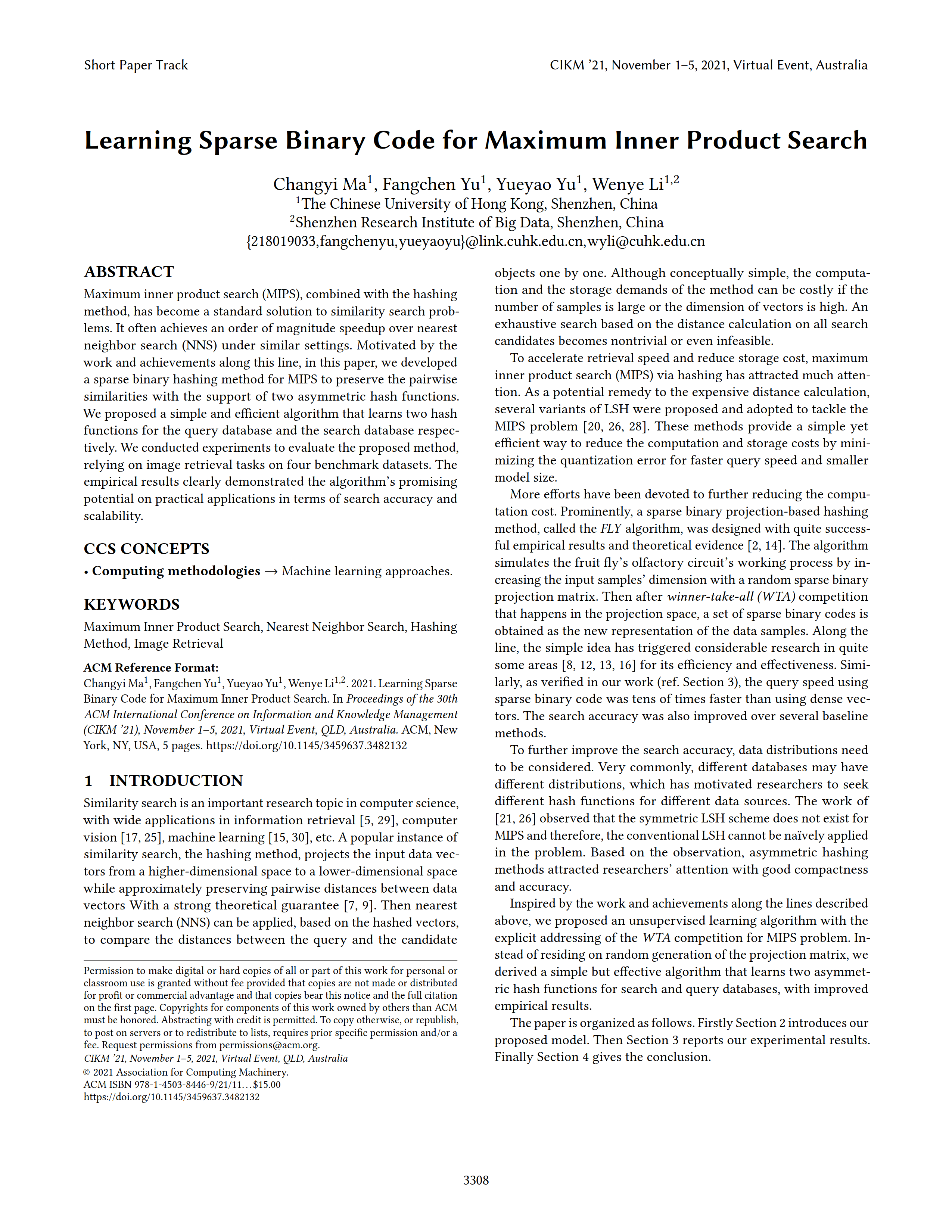
A sparse binary hashing method for maximum inner product search to preserve the pairwise similarities.
